

Services
M&R 360 provides practical maintenance, reliability, and asset management services for asset‑intensive organizations that want more from their EAM/APM and digital core. We bridge the gap between maintenance best practices and modern technology, aligning people, processes, data, and systems to drive measurable performance improvements.
What We Do
Identify Hidden Value
We uncover maintenance and reliability value leakage—the performance gaps and missed opportunities costing your organization money. Through data-driven assessment and strategic analysis, we identify quick wins and long-term optimization opportunities.
Maximize Your Technology Investment
Many organizations struggle to realize the full potential of their EAM/APM systems post-implementation. We help you extract real business value from digital investments through optimization, process redesign, and user adoption strategies.
Develop AI-Powered Solutions
We design and implement proprietary AI tools that enhance maintenance planning, predictive capabilities, and reliability performance—giving you a competitive edge without the enterprise consulting bill.
Partner with Your Technology
Whether you're working with an EAM vendor, system integrator, or technology provider, we deliver expertise-driven services that accelerate project success and improve outcomes.
Strategic Advisory
We advise boutique consulting firms on positioning, growth strategies, and preparation for eventual acquisition—sharing hard-won insights from industry experience.
Our Differentiators
Domain Expertise
Deep, practical knowledge of maintenance and reliability first principles combined with digital understanding and hands-on delivery experience.
Cost-Effective Delivery
Enterprise-caliber solutions without enterprise overhead.
Proprietary Tools
AI-powered focused value assessment capabilities to identify opportunities faster than traditional approaches.
Proven Track Record
Big 4-level experience adapted for mid-market realities
Who We Serve
Organizations post-EAM go-live struggling to translate technology investment into business results
Mid-market organizations looking to optimize M&R programs and extract more value from existing teams and systems
Large scale organizations seeking to improve targeted, M&R Improvements, reduced downtime, and enhance operational efficiency
Technology providers and system integrators needing specialized M&R expertise to support client implementations
Consulting firms looking to augment M&R capabilities on their M&R related large scale projects


How M&R 360 Solutions Helps
Services are grouped into five pillars to show how we can support your maintenance, reliability, and asset management program improvements


Pillar 1 – Identify maintenance and reliability value leakage
Assess practices, org, data, and systems for value leakage
Highlight quick wins and longer‑term opportunities
Provide a clear, prioritized roadmap for your team
Pillar 2 – Resolve value leakage with a 360° approach
Use a 360° view across people, process, data, and tech
Co‑design realistic changes with your teams
Support implementation so gains show up in results
Pillar 3 – Practical reliability and maintenance program design
Develop and refine PM and maintenance strategies
Strengthen planning, scheduling, and work management
Balance reliability, cost, and risk in program design
Pillar 4 – Optimize EAM/APM and digital work management
Practical EAM / APM designs to meet "boots to boardroom" needs
Optimize post‑go‑live use of EAM/APM platforms
Align processes, roles, and data with real work
Pillar 5 – Apply AI assistants to maintenance and reliability
Find AI use cases that help planners and technicians
Design AI assistants using your existing data and tools
Start small, prove value, and scale responsibly
The Problems We Solve
So many Canadian companies have invested heavily in maintenance and reliability technologies, but too often the day‑to‑day results don’t match the promise.
Missing M&R digital value: EAM, APM, or ERP upgrades are in place, but crew deployment, downtime, and work prioritization haven’t improved much.
The impact: Technology spend isn’t translating into better maintenance performance
Weak Ops‑Maintenance alignment: Maintenance struggles to align with operations and production, making it hard to do the right work at the right time.
The impact: Important work is delayed while urgent but lower‑value work consumes capacity
Outdated Reliability strategies: Reliability strategies and PM programs haven’t been updated properly, so teams end up doing the wrong work at the wrong time.
The impact: Assets still fail unexpectedly despite a heavy preventive workload
Unreliable master data: Master data is weak or inconsistent, so people don’t fully trust what assets are in the field or what reports are telling them.
The impact: Leaders question reports and decisions slow down or rely on gut feel
Inconsistent asset standards: Asset classes, tags, and standards vary by site or system causing confusion, duplication, and reporting gaps.
The impact: Comparing performance across sites is difficult and improvement efforts stall
Stranded digital and AI tools: Digital and AI tools are available, but poor data and unclear processes limit their real impact.
The impact: Promising tools are sidelined as “interesting” but not part of daily work
Tech‑first implementations: Past implementations focused on “getting the system live,” without fully addressing master data and process needs.
The impact: Teams adapt around the system instead of the system supporting good practices
If you are experiencing some of these challenges, let's talk and see if M&R 360 Solutions can help your existing investments really deliver.


Step 1 – Understand your current reality
Clarify the problem, the symptoms, and the undesired effects
Identify likely root causes so actions target the real issues
Agree on the real problems and the value at stake


Step 2 – Co‑design practical changes
Map out options across practices, org, and digital tools
Co‑design solutions with your people so they fit your culture
Prioritize actions into quick wins and staged improvements.
Help with rollout, coaching, and adjusting as reality hits
Keep an eye on reliability, cost, and risk indicators
Capture lessons learned so improvements stick and grow.
Step 3 – Support implementation & refinement


How Engagements Typically Work
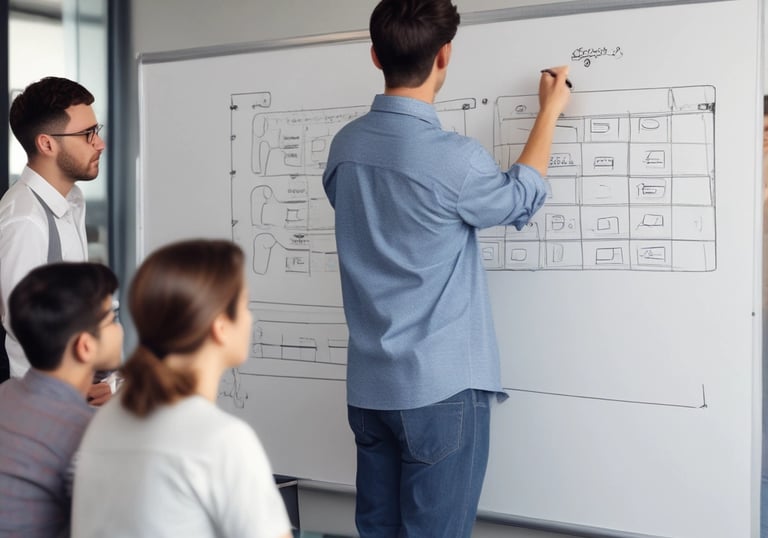
While each engagement is tailored, most follow a simple three‑step pattern that keeps things practical and outcome‑focused
Contact Us
Ready to unlock more Maintenance and Reliability value?
info@mr360.ca
1-416-985-7840
© 2025. All rights reserved.
PHONE